
SUMMARY: Italian fashion is a tale of luxury storytelling about family succession, independence, and Italian craftsmanship. For some fashion families, these act as a powerful brand differentiator, not just a business arrangement. Here are five families who excel at this.
For many Italian businesses, the family is an integral part of brand identity. It is one of seven identity pillars alongside heritage, place, quality, innovation and artisanship. Being known as a fashion family firm differentiates them from brands that are part of impersonal conglomerates like Kering Group or LVMH.
The fashion family starts with someone who has a creative skill combined with a vision of what the future holds. That vision is fused with an energy and drive that sets them apart. After some inevitable false dawns, the vision becomes a reality, and as it does, so does the desire to protect it. Because they share the same values and DNA, the family is seen as the best way to do this. This makes perfect sense, given that there is a financial reward that comes with being associated with the creative family genius.
A Tradition of Family Firms
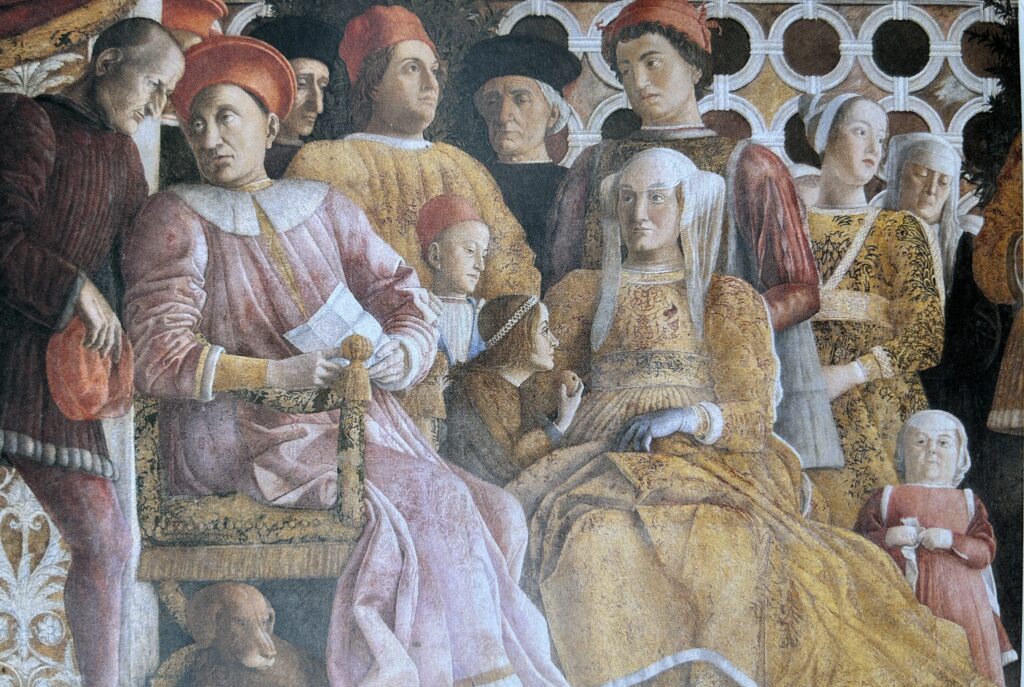
Italy is rich in family firms, and there is none more famous than the Medici in Renaissance Florence. Whilst their wealth came from being money-lenders and Papal bankers, they also supported local Florentine artists such as Michelangelo, Leonardo da Vinci and Botticelli. In Italian culture, the family has always played a dominant role, an entity to be respected and painted for posterity, as Andrea Mantegna did for the Duke of Mantua, Ludovico Gonzaga. The photography we see today of fashion families on websites and social media is simply a modern extension of this.
Historically, Italy was a country of independent city-states or kingdoms, each with its own culture and craft. These varied from region to region, depending on whether the local craft culture was based on wool, leather or wood.
Today, Florence is Italy’s most famous creative town, known worldwide for leather goods, stylish shoes and luxury designware. However, look further afield, and you discover that historically, Lake Como was known for fine silk, Vicenza for its goldsmiths and jewellery, and Brianza for specialist woodworking. Despite any regional or artisanal differences, they were family firms and some, like Ferragamo in Florence, would one day become internationally admired.
If this approach is so successful, why don’t more businesses in the fashion, design and artisan sectors follow it? Is it uniquely Italian? Or might any business from the Far East, Europe or South America take such an approach?
Today, many fashion families are household names; others are small artisan businesses. What they have in common is not just the ‘Made in Italy’ ethos but a belief that maintaining a family-run firm is the best way of growing the business and retaining customers. And behind the glossy photographs of happy families, there is often financial acuity, just as there was in the Renaissance. The main difference is that today, fashion families don’t go to war against each other if there is a difference of opinion.
What is a Fashion Family Firm?
In the fashion family, two or more members of the family or a partnership of families control ownership. The family members have a strong strategic influence on how the business is managed, and there is a commitment not to sell the business just because it is a financial asset.
Having only a few owners means that decisions can be made quickly. Strong interpersonal relations, make it harder to fire or dismiss someone, and family members often have multiple roles. They are equally a board member, a manager, a designer or a provider of some service.
As the business and the family grow, so does the owner’s sense of history and legacy. There is a desire to pass on a set of values to the next generation and to become an integral part of the local community. Over time, it is increasingly supportive and protective of its origins and heritage and nowhere is this better represented than in the village of Solomeo, home to the Brunello Cucinelli family.
Research by the AUB Observatory in 2019 showed that compared to the national average, Italian family firms in the fashion industry were more profitable and had a greater ability to repay debt. Whilst the reasons are not clear, the data suggests that the family firm is more effective at marketing and selling, and united in its desire to carry little debt.
One of the challenges the family firms face is leadership. Inevitably, most are perceived to be led by their creative founder. However, some firms with leaders over 70 years are seen to perform less well than those that have handed the leadership reins to the younger generation.
The AUB Observatory findings indicate that younger leaders are better at generating revenue. It appears that it is the second- or third-generation leaders with an innate understanding of the brand’s creative DNA who are best at combining modern and more profitable business practices.
Five Italian Fashion Families
Here are five family firms worthy of close consideration in terms of their history, identity and sense of community.
Ferragamo
History:
Founded in 1927 by Salvatore Ferragamo, the son of poor Tuscan farmers and the 12th of 14 children. He became famous for his innovative shoe designs, in particular his approach towards the design of the heel, creating a cork wedge, the stiletto heel and the ‘invisible’ sandal. His shoes were worn by Marilyn Monroe and Audrey Hepburn, which elevated how his shoes were perceived.
Whilst the business expanded internationally in the 1950s, Ferragamo died in 1960, aged only 62. His wife, Wanda, and then his sons, were left to build on his legacy and make the business fulfil its full potential.
Region:
Florence, Tuscany.
The Family:
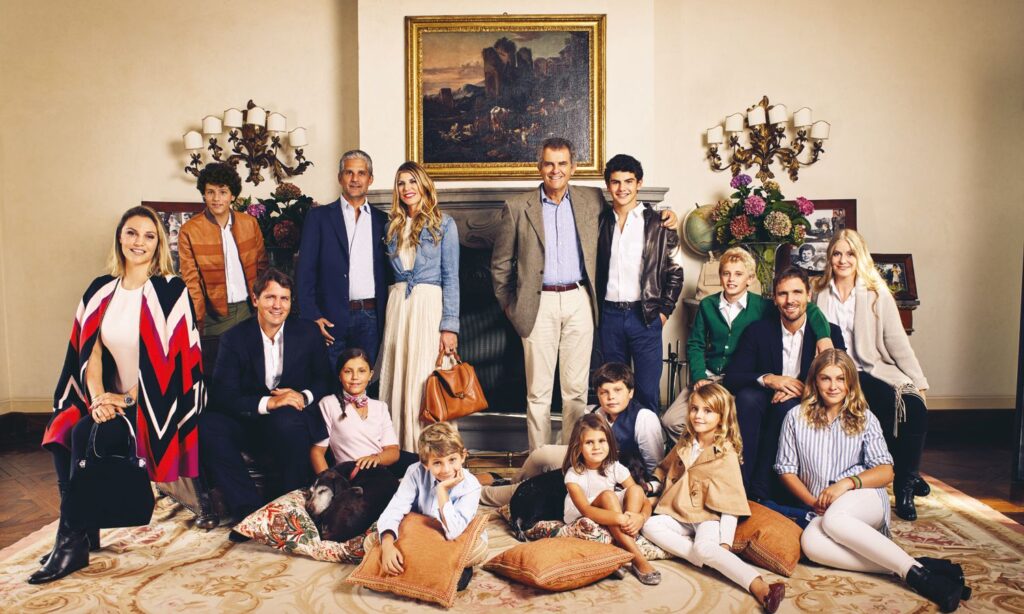
After Salvatore died in 1960, his widow ran the business until her children were ready to take over. Today, the company’s chairman is Salvatore’s son, Leonardo. Whilst the brand went public in 2011, it has kept control by retaining a majority stake in its holding company.
Sense of Community:
Ferragamo is seen primarily as a long-term supporter of Florence’s heritage, providing cultural patronage and the restoration of major statues and landmarks. There is the Museo Ferragamo dedicated to the history of the Ferragamo company, the life of Salvatore and his creations. The company ethos includes a commitment to women’s empowerment, gender equality, sustainability and community.
Brunello Cucinelli
History:
Founded in 1978 by Brunello Cucinelli, who grew up in a poor rural farming family in Perugia. After dropping out of engineering, he started a small cashmere business. He chose cashmere as he was drawn to making a quality product which could be kept for years. He also saw an opportunity to bring colour and a more human-centred approach to a material that was traditionally associated with darker colours.
Region:
Solomeo, Perugia (c.2 hours south of Florence.
The Family:
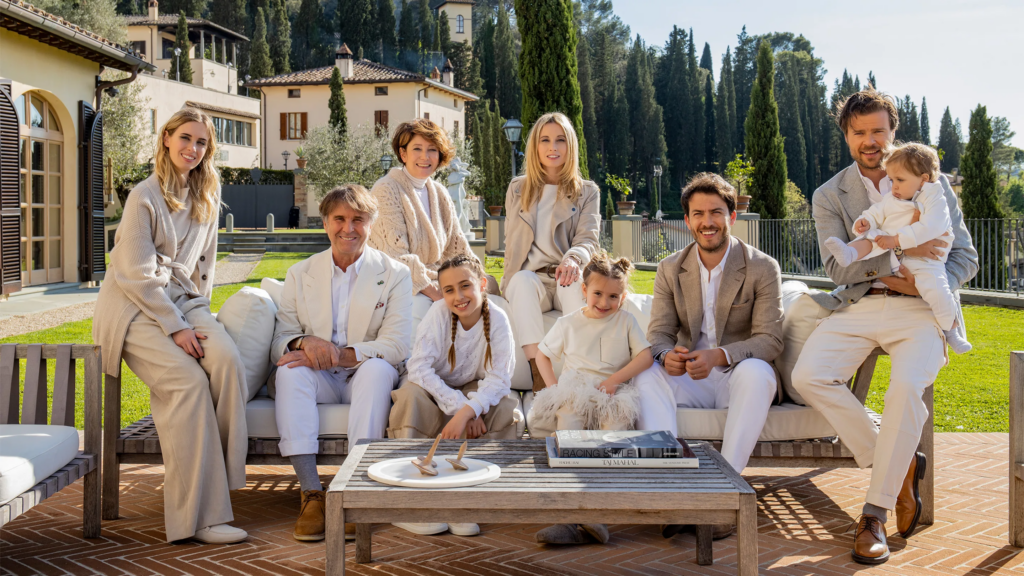
Brunello and his family own c. 50% of the company’s shares, which are listed on the Borsa Italiana. This is in the form of the Cucinelli Family Trust, with his daughters, Camilla and Carolina, as beneficiaries of the trust.
Sense of Community:
Cucinelli developed the idea of ‘humanistic capitalism’ that puts people before pure profit. Fair pay, short and humane work hours, no after-hours emails and a calm workplace are part of the model. With the production located in the village of Solomeo, the company restored it and funds training so that the local younger generation can learn artisan skills.
Missoni
History:
Founded in 1953 by Ottavio “Tai” Missoni and his wife Rosita Jelmini. Missoni started life as a small knitwear shop, specialising in multicolour and geometrical weaves which today are instantly recognisable. It blends local craftsmanship with art-inspired design to create a sense of modern elegance that’s not linked to any particular trend.
Region:
Sumirago, Nr Varese, Lombardy (c. 1 hour north of Milan)
The Family:
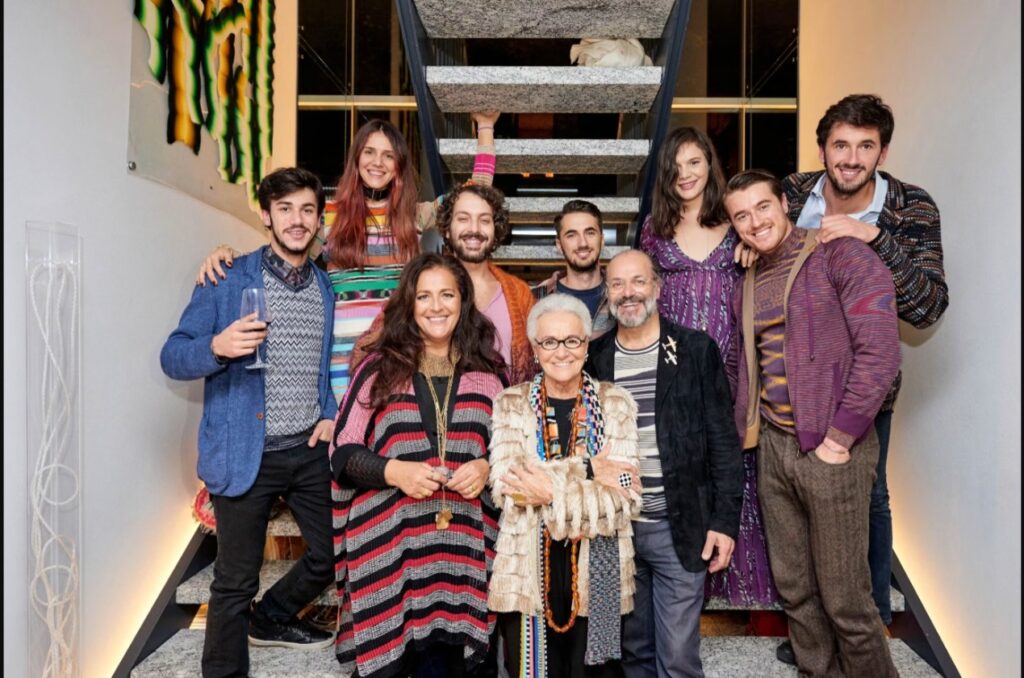
In 2026 Missoni family sold its remaining stake, ending direct family ownership of the business. The brand’s ownership was restructured so that FSI became the majority shareholder with 73%, while Katjes Quiet Luxury took 27%.
From 1997 to 2026, Missoni was run by the couple’s children. Angela as the creative director, Vittorio is the sales manager, and Luca is the director of the engineering department.
Despite the recent sale, the brand identity associated with that of a creative-family run firm. How long that will last, it will be interesting to see, particularly as it is seen as one of Italy’s most influential fashion houses.
Sense of Community:
The Missoni Foundation’s works with local institutions, museums, and schools. In doing so, it keeps the brand’s heritage active and purposeful, especially around Varese. The INTRECCI project was developed with the Museo Art Gallarate as a way to offer art students masterclasses linking art, fashion, and design. In Sumirago, where the brand moved production to in 1969, it has turned its industrial heritage into a cultural resource for the community.
Prada
History:
Founded in 1913 by Mario Prada as a small leather good shops on Via Turati in Milan. Whilst it became a respected Milanese brand, it was not until Miuccia Prada took it over and repositioned the brand with dark, minimalist designs that it started to grow.
When she married Patrizio Bertelli, the combination of creativity and entrepreneurial flair made the brand international. This led to the launching of Miu Miu, a more experimental label and Linea Rossa, versatile and fashionable sportswear. From 2000 to 2020, it started to acquire heritage brands such as Church’s (shoes), Versace (fashion), Marchese 1824 (pastry & coffee) and Luna Rossa (sailing).
Region:
Headquarters: Milan. Production: Tuscany, near Arezzo
The Family:
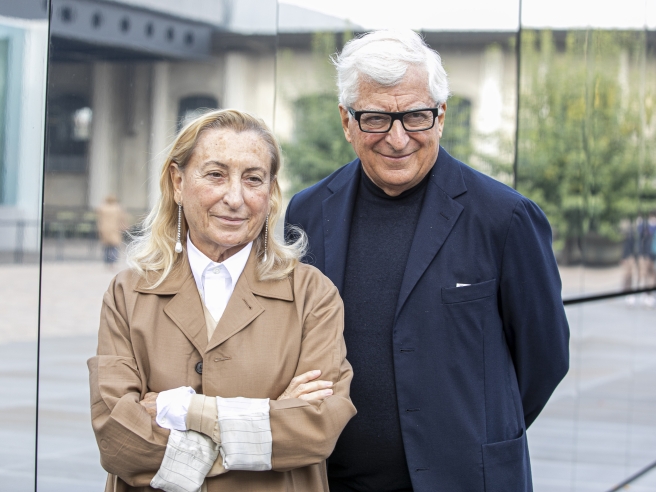
Prada has a dynastic family feel to it, albeit more secretive than others. Listed on the Hong Kong Stock Exchange since 2024, the family’s holding company has held 80% of the shares. In 1978, ownership passed down to Mario Prada’s granddaughter, Miuccia, and her husband, Patrizio Bertelli. Their first intention is to maintain independence from multi-giant brands like LVMH and Kering. One of their son’s Lorenzo, who is the Chief Marketing Officer and Executive Director, has 50.5% of the ownership and Giulio, the remainder.
Sense of Community:
Prada runs numerous initiatives. There’s the Forestami Initiative, with aims to plan 3 million trees across Milan by 2023, Meta, a Milanese circular economy project that donates used fabric and other materials for local design and art students to use and “Shaping a Future” conferences to find solutions to social and environmental issues. Then there is the Fondazione Prada, a cultural space for the promotion of contemporary art and community engagement.
Stefano Ricci
History:
Founded in 1972 by Stefano and his wife, Claudia. Stefano Ricci began with silk ties, and in the 1980s and 90s expanded into shirts, suits, knitwear, shoes, leather goods, jewellery, and other luxury lifestyle products.
In 1993, Stefano saw the potential of doing business in China and opened a store in Shanghai. It now has up to 18 stores in China, including Hong Kong and Macau, as well as the rest of the world. In 2010, it purchased the historic Florentine silk fabric manufacturer, Antico Setificio and in 2025, Moleria Locchi, a Florentine producer of fine crystal and glassware. Integral to the brand and its acquisitions is its “100% Made in Italy’ philosophy.
Region:
Fiesole, near Florence in Tuscany.
The Family:
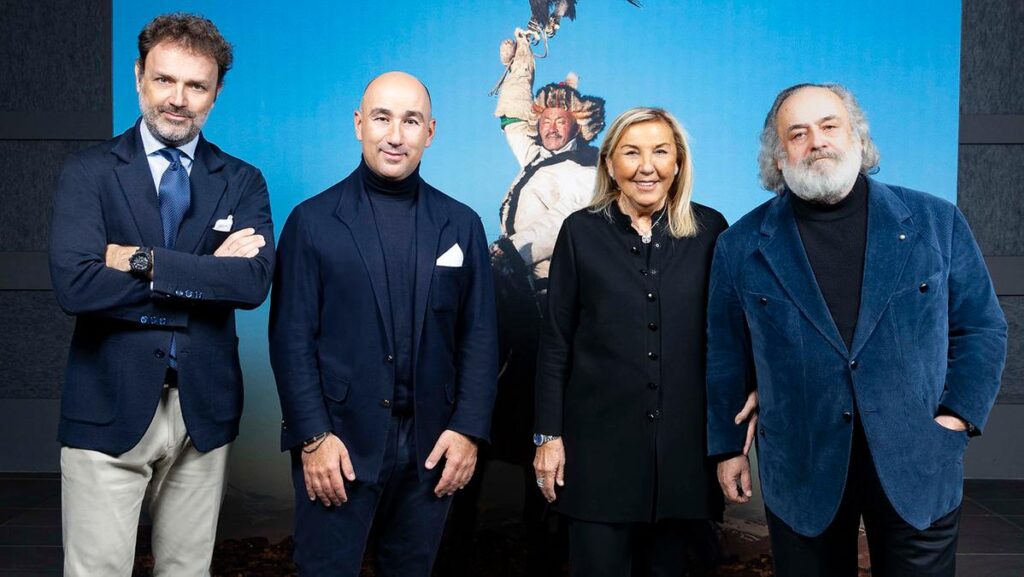
Stefano Ricci is both Chairman and designer, his sons Niccolo and Filipo are respectively CEO and Creative Director and his wife, Claudia, is responsible for production and fabrics.
Sense of Community:
Although Stefano Ricci is not a philanthropy-first company, it invests in local culture and craftsmanship. This is primarily through its commitment to 100% Italy-based production and employment. Its purchase of local artisan businesses is a confirmation of this, as well as its promotion of Florence’s fashion heritage through support for local restoration and digitisation projects.
Family Fashion Conclusions
Few think, “I’m going to create a creative fashion family dynasty”. Instead, it evolves from a recognition by someone close to the original designer that they are in the presence of someone capable of designing clothes others want to buy. It’s a partnership. Consider each of the five brands above, and a husband or wife works closely alongside the designer, in either a marketing, financial or production capacity.
Reflect on the Italian fashion family firms above, and here is what they have in common:
- A creative catalyst in the family who is either first or second generation.
- A unique ability to combine creativity with commerciality.
- Recognition of the marketing potential of being seen as a warm and harmonious family
- The ability to exploit “Made in Italy” as a signifier of quality and excellence
- A desire to maximise the “Made in Italy” ethos across international markets.
- The need to protect the family brand and pass it down through the generations
- A commitment to remain independent and not become part of a large conglomerate like Kering Group or LVMH
- A sense of pride in where the brand was born and a commitment to support and reward the local area.
None of these characteristics precludes a fashion family that is not “Made in Italy, from applying similar tactics and approaches so long as there is a market demand for their products. All countries have a heritage and tradition unique to them; it is just not communicated as part of brand identity. All businesses are born somewhere; they just fail to maximise the potential of this. All family businesses have values and beliefs; some are just better at communicating this.
Great fashion families are proud of who they are and what they have achieved. They are as much the face of their business as the clothes and items they design and sell. But first, you need to decide to make the family the face of yours.
The “Made in Italy” Marketing & Branding Programme
“Made in Italy” is a cultural business learning programme for those who own or promote a business in the luxury fashion, design, or artisan sectors and who seek world-class expertise.
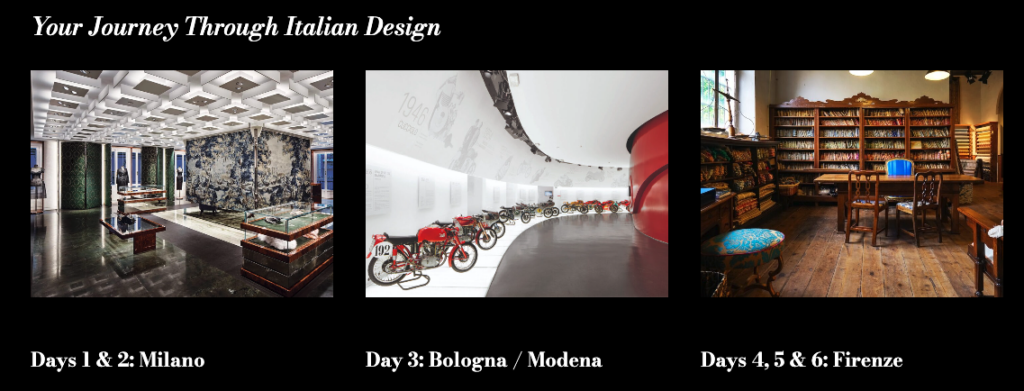
It’s an immersion into the branding and marketing of Italian luxury brands, built around fashion, design and craftsmanship. Over six days, you are part of an event that begins in Milan and ends in Florence.
Through Made in Academy’s network of contacts, you’ll decode the DNA of Italian creativity, complete project work, network with business leaders and leave with actionable ideas. You’ll listen to and meet speakers from international brands such as Gucci, Dolce&Gabbana, Balenciaga, etc., as well as Florentine business owners, and professors from Polimoda in Florence.
Next Event
- 26 – 31 October
Related Articles
Made in Italy as a Strategy: What Fashion Entrepreneurs can learn from Stefano Ricci