
The Slow Movement originated in Italy in 1986 as a pushback against fast-paced modern life and globalisation. It promotes and celebrates the rewards of slow food, slow cities and slow travel. However, when Stefano Ricci returned from a trip to China in the early 1990s, he saw a business opportunity posed by an oriental culture with a completely different way of thinking.
On his return to Italy, and in response to this, he said to his children, “Kids, I’ve just come from a country where I was very, very impressed by the speed at which everybody was walking. So, I believe this country is where we have to invest for our company because I’m sure that in the future they will lead the future of the economies around the world.”
The Great Acceleration
He was referring to ‘the great acceleration’, how all aspects of modern society get faster and faster, whether it’s the length of a shot in a movie, the beat in a music track or the time to download online information. Those who walk quickly are seen to have a greater sense of purpose and intent than those who are more languid or leisurely in the way they walk. It’s as if Stefano Ricci, the founder of the eponymous fashion brand, felt his own ambition matched that of the Chinese.
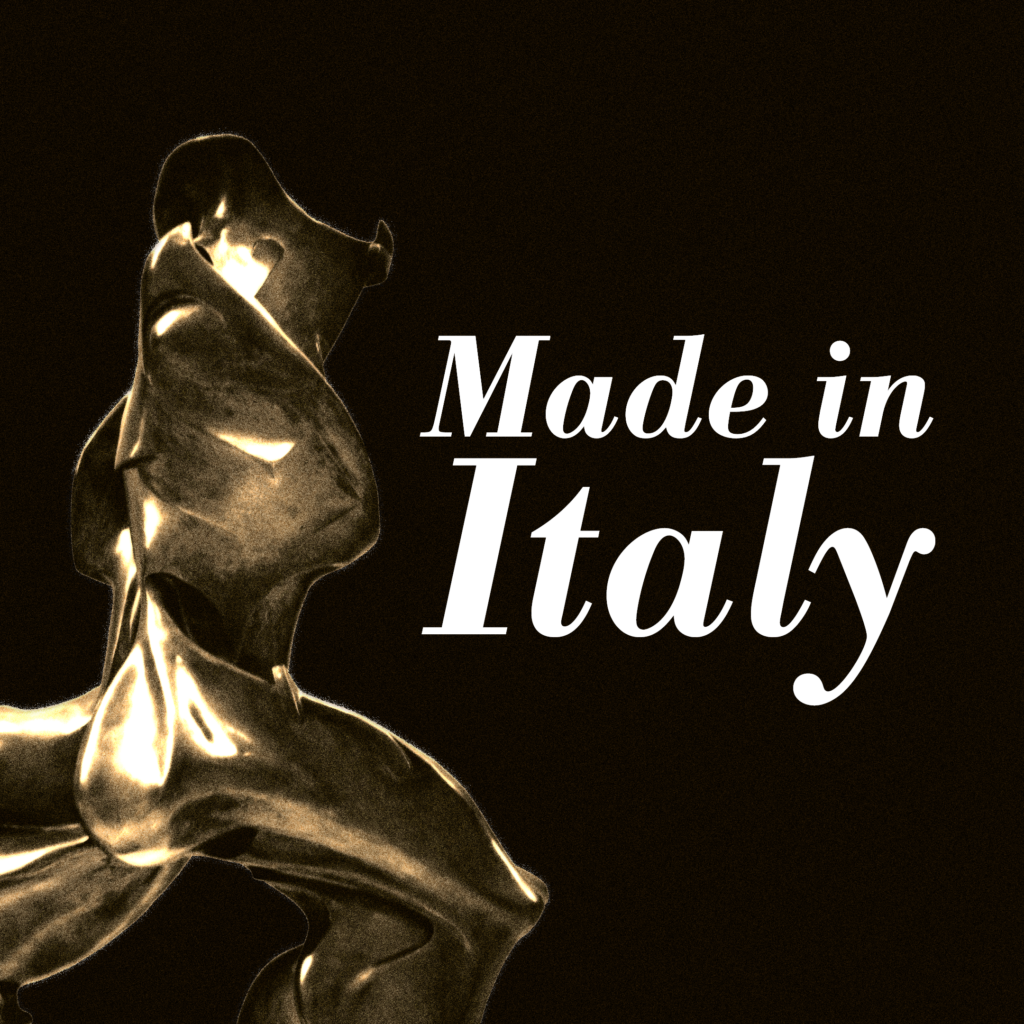
It’s also a curious twinning with the Italian futurist movement of the early 20th century, which rejected a classical past in favour of speed and technology. “All things move, all things run, all things are rapidly changing’, quoted its manifesto.
That is true today, and it is one of the reasons why on the Made In Academy website, there is a 1913 bronze sculpture of a running man by Umberto Boccioni, a Futurist. It’s called ‘Unique Forms in Continuity of Space’.
Stefano Ricci’s observation was how a small Florentine fashion brand developed a Far Eastern market, which today has boutiques in Beijing, Shanghai and other cities around the world. The irony is that Stefano Ricci’s commercial success was not really down to speed.
Quite the opposite. It is a brand that chose not to compete against large fashion brands because it was unconvinced that a quest for quantity would never deliver true quality. Instead, its focus was, and still is, on handmade production, old-world tailoring and the use of exclusive materials. Attributes that the wealthy, whatever their nationality, recognise and appreciate.
As a designer and manufacturer of exotic ties, Stefano Ricci was founded in 1972 by Stefano and his wife, Claudia, with a “100% Made in Italy’ philosophy from the start.
Like many Florentine businesses, it had pride and confidence in making clothes of exceptional quality, and an ability to innovate and adapt to modern markets and tastes. Over the decades, it expanded from ties to menswear, footwear, leather goods, fragrances, jewellery, and interior design. All the time, using the very finest materials and artisans, which over time became progressively more exclusive and expensive. Today you will pay £850 for a pair of jeans, £600 for a linen shirt and £4,500 for a suit.
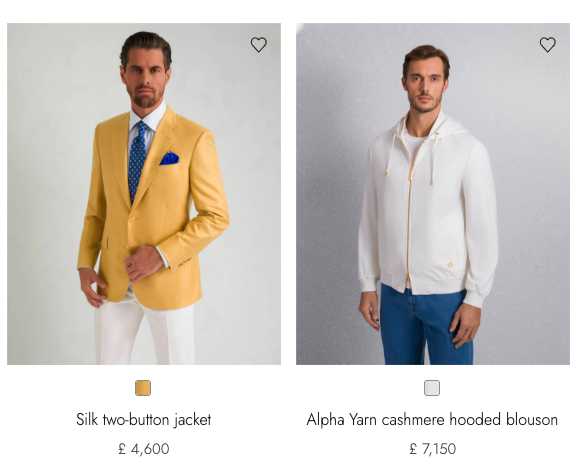
Why are Stefano Ricci’s clothes so expensive?
The answer lies in understanding how the brand applies the “100% Made in Italy” ethos. Whilst most people in the West accept that many of their products are made in China, anyone who buys a Stefano Ricci product will know it is 100% Italian.
Any purchase they make is underpinned by:
- A commitment to traditional Italian tailoring and craftsmanship.
- A level of detail that is time-consuming and, often, bespoke.
- Use of the finest, rarest and most luxurious fabrics in the world.
- Specialists who “want to make the inside of a jacket more beautiful than the outside”
- The knowledge that Ricci clients expect nothing less than perfection.
If you are still wondering, “Why are Stefano Ricci clothes so expensive?” you are not their target audience. They sell to “the man who has everything” and align their Florentine, Made in Italy, heritage to those who can afford to appreciate it.
The Chinese, whom Stefano watched walking so quickly, admire brands that honour heritage and masterful artisanship, especially when positioned as a personalised and unique luxury experience. Like many others, they enjoy that feeling of belonging to something rare and exclusive, a club with an ethos passed down through the generations. This explains why the brand is now dressing its third generation of Chinese clients.
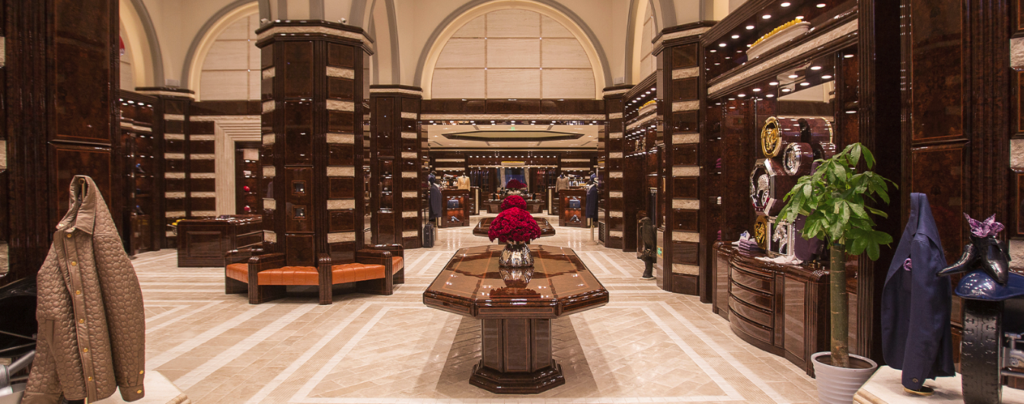
Applying “Made in Italy” to non-Italian cultures
Italian heritage does not necessarily mean an exclusive focus on Italian tradition and culture. Stefano Ricci explores heritage and tradition found internationally, in countries such as Peru, Cambodia and Mongolia, and then applies the “Made in Italy” approach that such places inspire.
It is an approach that works equally the other way around. There is nothing to stop a Chilean, Malaysian or Chinese fashion business from studying what “Made in Italy” means, and then applying that ethos and approach with the appropriate cultural nuance. All businesses have a heritage and a story to tell. They either struggle to communicate it because they failed to understand the essence of their brand and what it stands for, or they have poorly executed their communication with their target audience.
Antico Setificio: Slower and Older is Best
For over 700 years, Florence has produced silk fabrics and, at its peak, had 8,000 looms. Today, twelve of them are owned by Antico Setificio Fiorentino. Established in 1786, it is recognised as the producer of the finest and most precious silk fabrics worldwide. To this day, it uses a warper machine based on a design by Leonardo da Vinci in the late 15th century; it is one of six hand looms that produce only 15 inches of fabric a day. These machines can create any fabric to order, and in any colour, but not at any speed. Modern machines work too fast for Antico Setificio and would break the delicate silk threads.

It goes to show that sometimes slower and older is better, especially if you have a library of over 200 historical fabrics designed for the Italian nobility and European monarchs and a team of weavers dedicated to creating fabrics that only the wealthiest and discerning can buy. Exclusive and elitist? Of course. But that is what some clients demand and can afford. They appreciate that something produced by hand takes time. They are also buying into a weaving tradition that only a handful of Florentine weavers have mastered. It’s physically demanding work, not done by men but mothers and daughters, beneficiaries of artisans’ skills passed down through the generations.
Antico Setificio clients believe they are not only buying a fabric, but the artisan’s dedication and commitment to quality. That is the real difference between an artisanal textile and one made industrially.
When you understand this, you appreciate why Stefano Ricci purchased Antico Setificio in 2010. As a business dedicated to exceptional quality, he bought it in order to produce exceptional fabrics for his new home collection. In doing so, he brought together two Florentine businesses 186 years apart but identical in their dedication to quality and exclusivity. Fabrics, trims, ribbons, cords and braiding for upholstery, curtains and clothing. Fabrics for the Four Seasons Hotel in Florence, the Tsar’s Room in the Kremlin, the designs for silk shirts worn by Nelson Mandela and Andrea Bocelli and the vestments of many Popes.
Heritage Glassware: Moleria Locchi
Once you have established yourself as a business that is dedicated to only the finest and best, it becomes both harder and easier to acquire businesses that match your own values and aspirations. Harder because there will not be that many, easier because when you do find them, the fit is more natural. It explains why in 2025, Stefano Ricci acquired Moleria Locchi, a Florentine workshop famous for producing fine crystal and glassware, as well as engraving and restoration.
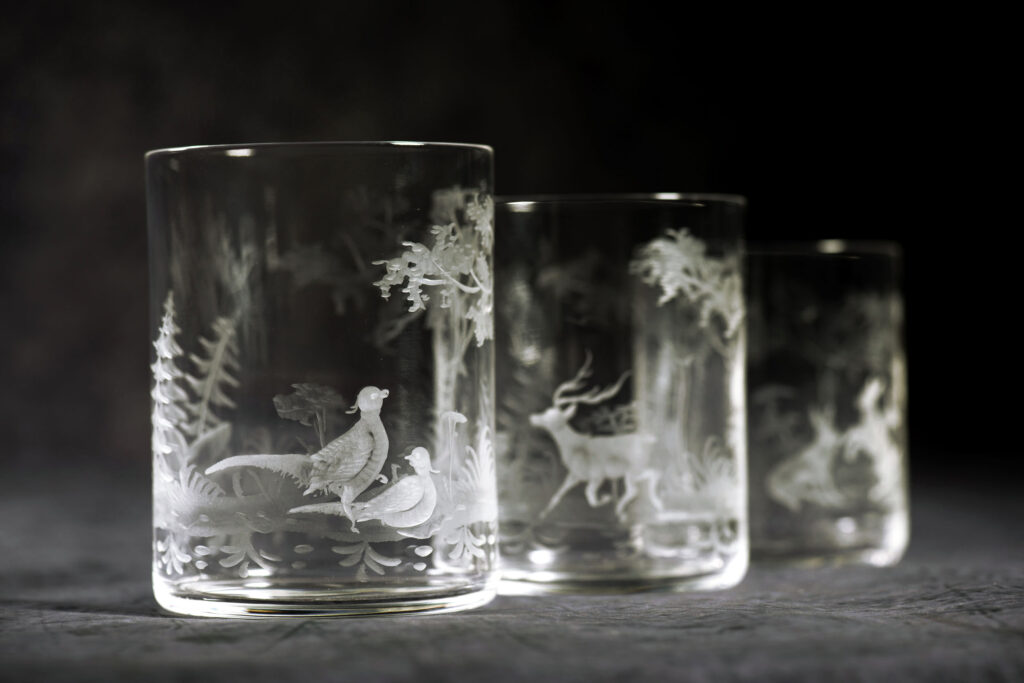
Moleria Locchi was a company Stefano Ricci had been working with for the past 12 years, and like his acquisition of Antico Setificio, it reflects his commitment to support local artisan heritage. Heritage and artisanship are two essential hallmarks of ‘Made in Italy’ branding, and by bringing such businesses into the Stefano Ricci fold, each brand, in its own way, becomes stronger.
“Made in Italy” as a branding model
“Made in Italy’ is a branding model in itself, comprising the overlapping pillars of Heritage, Place, Quality, Innovation, Artisanship and Family.
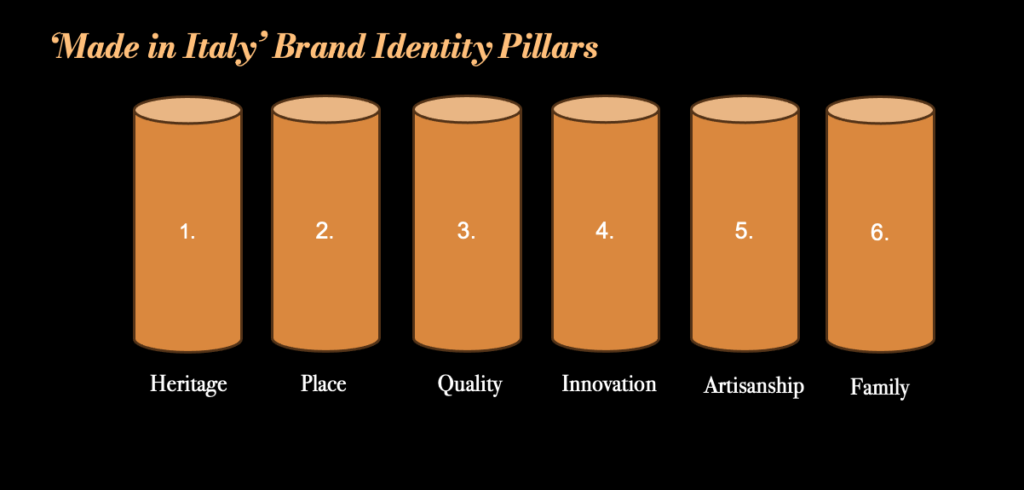
Some brands focus exclusively on only two or three, others on all six. The degree to which they will maximise the focus on one over the other varies from brand to brand. Do these apply only to Italian brands? I believe not. Any brand can master and expand on these. Nor is ‘creativity’ a pillar. To include it is like saying ‘trust’ is a brand value. Creativity is implicit in the very existence of a luxury fashion brand; without it, none of the other pillars can exist.
The “Made in Italy” Marketing & Branding Programme
“Made in Italy” is a cultural business learning programme for those who own or promote a business in the luxury fashion, design, or artisan sectors and who seek world-class expertise.
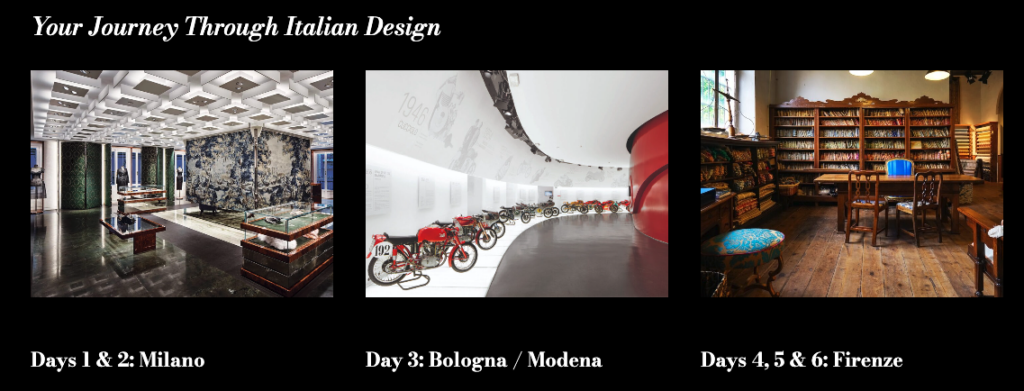
It’s an immersion into the branding and marketing of Italian luxury brands, built around fashion, design and craftsmanship. Over six days, you are part of an event that begins in Milan and ends in Florence.
Through Made in Academy’s network of contacts, you’ll decode the DNA of Italian creativity, complete project work, network with business leaders and leave with actionable ideas. You’ll listen to and meet speakers from international brands such as Gucci, Dolce&Gabbana, Balenciaga, etc., as well as Florentine business owners, and professors from Polimoda in Florence.
October Event
- 26 – 31 October
Related Articles
“Made in Italy” Marketing – An Open Door to Branding Excellence